
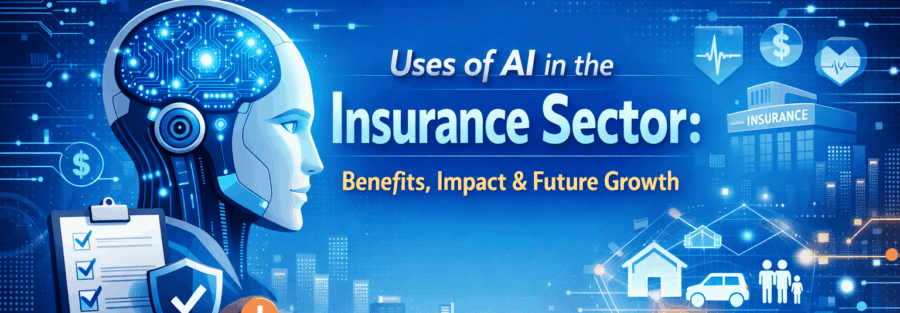
Uses of AI (Artificial Intelligence) in insurance sector impact the overall industry in different ways, like analysing the vast database, observing behaviour patterns and checking the overall available information through past claim experiences, social media, and uses of new technologies by individuals and institutions. To Improve Underwriting Accuracy, speedy claim processing and automated customer engagement by using an overall cost reduction of approximately 40% by 2030 as per industry estimation.
Key uses of cases through machine learning driven real-time risk assessment and accelerated mitigation, Uses of Chat boat for customer engagements by providing 24/7 support and predictive detailed analysis for claim detection. Major Artificial Intelligence Applications in Insurance :
Underwriting (Risk Analysis & Pricing) –
Artificial Intelligence (AI) algorithms analyse large and diverse databases, such as Behavioural Pattern of Customer, IOT Inputs, medical records, etc. to create more precise and personalized risk profiles. This enables speedy underwriting decisions, evaluations and data-supported pricing.
Management and Claim Processing –
Artificial intelligence may help to review the claim documents, check any duplicity, evaluate policy wording and, accordingly, suggest the best solutions by viewing images, and previous claim patterns may help in reducing the turn-around timing and reduce the workforce and manual intervention and even automate the claim processing.
Fraud Detection & Mitigation –
AI systems can detect challenges and suspend full patterns through historical and real-time data. This may help claim settlers identify and prevent any fraudulent activities pertaining to claims and reduce financial burden on the insurance company.
Improved customer service and experience –
AI-powered bots can help the customer round the clock 24/7 for any routine customer queries, like premium calculation / quote generation, claim reporting, FAQ sharing, policy downloading, routine inquiries, etc. by improving customer experience and customer satisfaction as and when needed truly at customer’s convenience without any manual interventions.
Individualization and marketing –
AI enabled innovative products such as customized health insurance plans, or removal of non-related add-ons by checking the customer’s behaviour and lifestyle pattern by doing individual risk profiling and suggesting a more personalized insurance product suited to his / her individual requirements.
Future of AI for the Insurance Industry (Advantages and Future Utility) –
AI in Insurance Sector can work as a support system which can enhance operational control and efficiency, strengthen risk accuracy and can help in enhancing the overall consumer experience. Going forward, Generative AI can automate different functions which may be complex in nature, like policy document analysis and summarization, different types of interpretation, including legal and compliance aspects, and a support system for medical and other high-value claims, may lead towards a robust digital and proactive execution model for industry.
Future of AI for the Insurance Industry (Disadvantages or Challenges) –
Despite advantages to some extent, AI also presents challenges like data privacy or algorithmic sabotage and requires comprehensive governance guidelines to ensure a clear view, transparency, without bias and fairness, fulfilling regulatory compliance as well, hence AI in insurance Sector has its own limitations at present.
FAQs Based on the Uses of AI in the Insurance Sector Topic –
1. How is AI used in the insurance sector?
AI is used in the insurance sector to analyze large datasets, assess risk, detect fraud, automate underwriting, process claims faster, and improve customer service through chatbots and virtual assistants.
2. What are the benefits of using AI in insurance?
The key benefits of AI in insurance include improved underwriting accuracy, faster claim settlement, reduced operational costs, enhanced fraud detection, and better customer engagement.
3. How does AI improve underwriting accuracy in insurance?
AI improves underwriting accuracy by analyzing historical data, customer behavior patterns, past claims, and external data sources such as social media and IoT devices to assess risk more precisely.
4. Can AI reduce insurance claim processing time?
Yes, AI significantly reduces claim processing time by automating document verification, damage assessment, fraud checks, and approval workflows, leading to quicker claim settlements.
5. What is the future impact of AI on the insurance industry?
The future impact of AI on the insurance industry includes increased automation, personalized insurance products, smarter risk assessment, and an estimated cost reduction of up to 40% by 2030.